
How to Choose a Coffee Table for Your Living Room
The coffee table is one of the pieces that most influences the balance of a living room. Although it is often perceived as an occasional piece, its presence affects circulation, comfort, and the overall aesthetics of the space.
If you’re wondering how to choose a coffee table that naturally fits into your home, the answer lies in carefully analyzing your surroundings: dimensions, layout, and style. It’s not just about selecting a beautiful table, but about finding the right proportions and materials to suit your everyday life.
Below, we help you understand how to choose a natural wood coffee table that truly works in your living room.
Before choosing a coffee table, analyze your living room
Before focusing on designs or finishes, it’s important to observe the space with a practical mindset. The coffee table should integrate seamlessly without obstructing movement while maintaining visual harmony.
Room size and proportions
The first step in understanding how to choose a coffee table is measuring accurately. The table should be proportionate to both the sofa and the available space.
As a general guideline:
- The ideal length is usually around two-thirds the length of the sofa.
- The height should match the sofa seat height or be slightly lower.
- It’s advisable to leave 40–50 cm (16–20 inches) between the table and the sofa to ensure comfortable circulation.
In smaller living rooms, opting for visually light designs helps prevent a sense of overcrowding.
Sofa layout and walkways
The arrangement of furniture completely determines your choice. A living room with an L-shaped sofa requires a different solution than one with two facing sofas or an open-plan space connected to the dining area.
Before deciding, make sure the table:
- Does not interrupt natural walkways.
- Allows comfortable movement around it.
- Maintains balanced spacing in relation to other furniture pieces.
A well-chosen coffee table doesn’t just complement the sofa, it helps structure the space and bring visual coherence.

What size should the perfect coffee table be?
Choosing the right size is essential to maintain harmony. A table that is too large can feel intrusive; one that is too small may seem insufficient.
Coffee tables for small living rooms
In compact spaces, it’s best to prioritize models:
- With reduced depth.
- Featuring light structures or visible legs.
- In light tones or natural finishes.
Round tables or those with softened edges work particularly well, as they facilitate movement and visually soften the space. Nesting tables or designs with built-in storage can also maximize functionality without adding visual weight.

When the living room is very small and cannot accommodate a traditional coffee table, side tables placed next to the sofa can be an excellent alternative. They provide a practical surface without occupying the center of the room and help maintain a clear and fluid circulation.


Coffee tables for large living rooms
In spacious living rooms, the coffee table can take on a more prominent role. Suitable options include:
- Large rectangular tables.
- Solid wood designs with substantial presence.
- Double-table compositions or modular arrangements.
A piece with character helps visually balance the sofa’s volume and prevents the room from feeling empty or disproportionate.
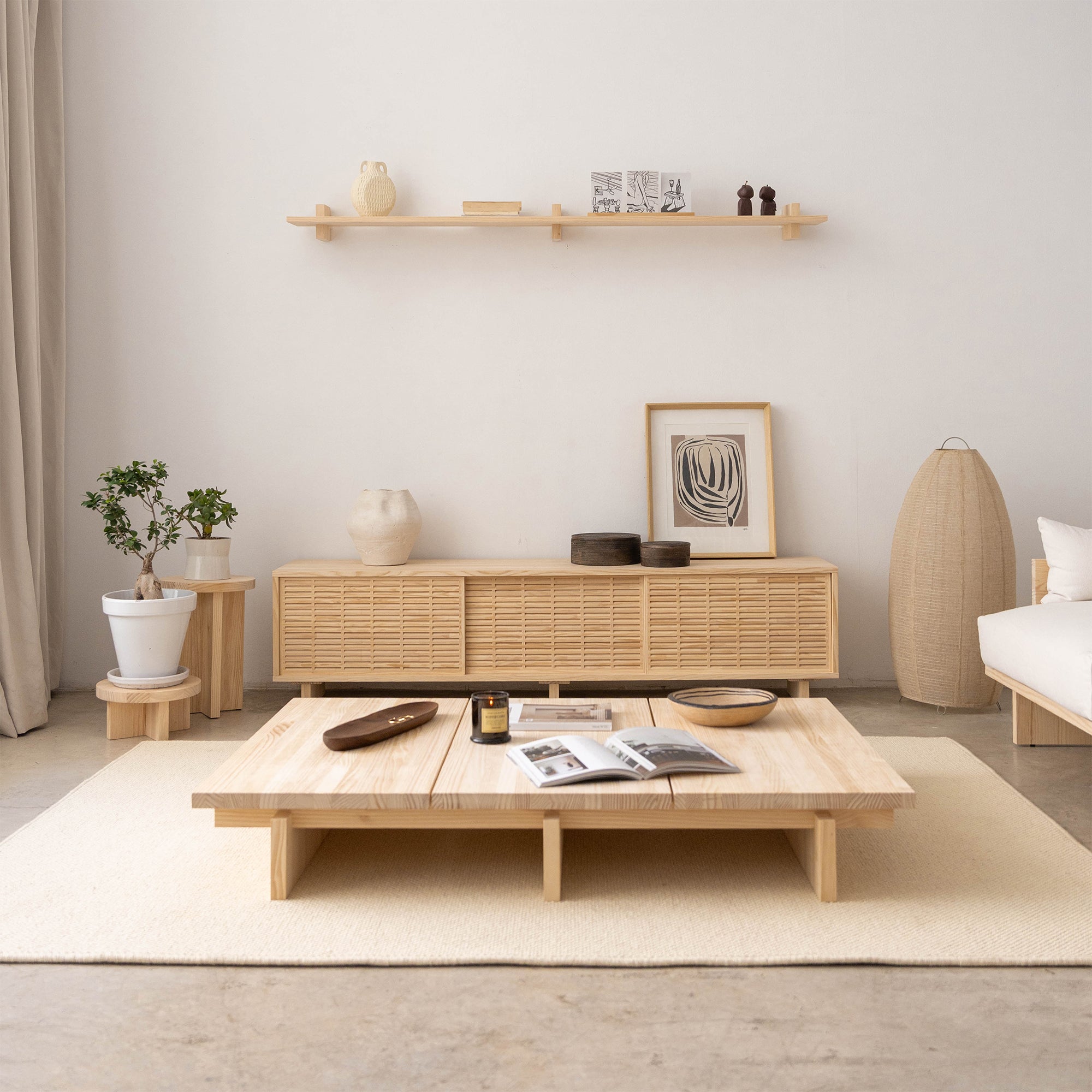
Coffee table shape: which one fits your living room best?
Shape influences both aesthetics and functionality. Understanding how to choose a coffee table means considering which geometry best supports your layout.
Rectangular coffee tables
This is the most common and versatile option. They work particularly well with long sofas or linear arrangements.
They create a sense of order and structure while providing ample surface area for decorative objects, books, or trays. In contemporary or minimalist living rooms, straight lines reinforce balance and clarity.

Square coffee tables
Ideal for L-shaped sofas or facing seating arrangements.
A square table establishes a clearly defined central point and enhances symmetry. In larger rooms, it can become a statement piece, especially when crafted in natural wood with visible grain.

Round or oval coffee tables
Perfect for softening interiors dominated by straight lines or for homes seeking greater visual flow.
Without sharp corners, they improve circulation and are safer in homes with children. They also introduce a sense of movement and help break the rigidity of certain layouts.

Combined or modular tables
Beyond traditional shapes, there are combined tables made of two pieces of different sizes that can stack or separate according to need. This solution allows for playful compositions: stacked, they occupy less space and maintain a compact arrangement; separated, they expand the surface area and add dynamism to the living room.
These are especially useful in spaces where flexibility is desired without sacrificing style, combining functionality with a creative approach to layout.

Set 2 tables Tramadiu and Tuna
Materials and finishes: how they influence your living room style
The material affects not only the aesthetics but also the durability of the piece. The coffee table is used daily: we place cups, books, and trays on it, and it may occasionally endure small knocks or spills.
Solid wood stands out for its strength, authenticity, and ability to age beautifully. Each grain pattern is unique, giving every table its own character.
In addition, varnishing plays a fundamental role. A high-quality protective finish:
- Increases resistance to stains and liquids.
- Protects against minor impacts.
- Makes everyday maintenance easier.
In a space like the living room—where daily life unfolds—choosing honest materials and proper finishes ensures that the table maintains its appearance over time.

Understanding how to choose a coffee table is ultimately about balancing proportion, functionality, and style. Analyzing the space, selecting the right shape, and investing in durable materials allow this piece to integrate naturally into your living room.
When chosen well, the coffee table becomes more than just a surface-it becomes the element that brings the room together and supports everyday moments. Because thoughtfully designed furniture doesn’t simply fill a space; it makes it more comfortable, harmonious, and personal.
Leave a comment